Tube Strikes Wind Down with Dispute Unresolved
Prospect remains of disruption over next two months
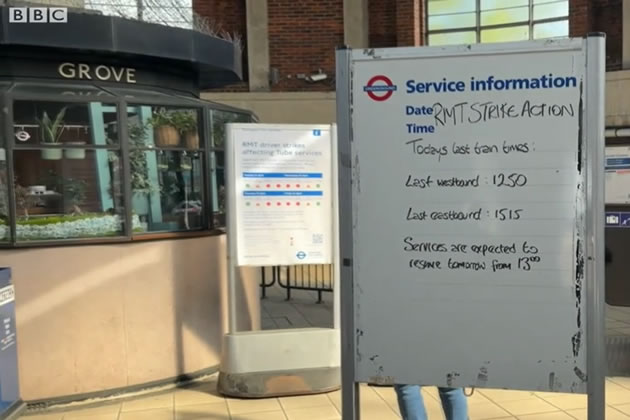
Most lines were disrupted with some suspended completely
April 24, 2026
With industrial action on London Underground gradually winding down this Friday afternoon (24 April), it is still not clear whether Londoners will be subjected to the same inconvenience over the next two months.
W ith multiple lines fully closed in the morning , services starting late, and knock-on effects spilling into the bus and Overground networks the strikes have certainly had an impact . With no breakthrough in talks, the remaining strike dates in May and June currently look likely to go ahead.
London has now endured four consecutive days of disruption following the first two RMT walkouts on 21–22 April and 23–24 April. The impact has been felt across almost the entire Underground network, with several lines seeing no service at all. Rhe Piccadilly and Circle lines have been completely shut during strike periods, while the Central line has been suspended between White City and Liverpool Street, and the Metropolitan line between Baker Street and Aldgate.
Even on lines where trains have continued to run, services have been heavily reduced, overcrowded and unreliable. Transport for London has warned passengers to expect significant disruption until at least midday on the days following each walkout, with no trains running before 7.30am on strike-adjacent mornings.
The disruption has extended beyond the Tube. Seven bus routes in east London have been hit by a separate 24-hour strike by Stagecoach staff, compounding the pressure on commuters already struggling to find alternative routes.
The economic impact has also been notable. Business groups have warned that the walkouts are placing fresh strain on London’s hospitality and night-time economy, with operators reporting lost bookings and reduced footfall as late-night travel becomes unreliable. Small and medium-sized businesses, already facing rising costs, have described the timing as “punishing.”
The dispute remains centred on Transport for London’s proposal to pilot a voluntary four-day working week for Tube drivers. The RMT argues that the compressed schedule would lengthen shifts and increase fatigue, while TfL maintains that the change is optional and in line with working patterns used by other train operators. Both sides have repeated these positions throughout the week, and no new concessions have been announced.
As for the likelihood of the remaining strike dates going ahead, the picture is not encouraging. Historically, Tube strikes are sometimes called off at the last minute, but as of the latest updates, negotiations are ongoing without signs of a breakthrough. Reports note that strikes can be cancelled with less than 18 hours’ notice, but there is currently no indication that the RMT intends to withdraw the upcoming May and June walkouts.
Unless there is a significant shift in talks, Londoners should plan for further disruption on 19–20 May, 21–22 May, 16–17 June, and 18–19 June, with the same pattern of reduced services, full line closures and morning-after delays expected.
Like Reading Articles Like This? Help Us Produce More This site remains committed to providing local community news and public interest journalism. Articles such as the one above are integral to what we do. We aim to feature as much as possible on local societies, charities based in the area, fundraising efforts by residents, community-based initiatives and even helping people find missing pets. We've always done that and won't be changing, in fact we'd like to do more. However, the readership that these stories generates is often below that needed to cover the cost of producing them. Our financial resources are limited and the local media environment is intensely competitive so there is a constraint on what we can do. We are therefore asking our readers to consider offering financial support to these efforts. Any money given will help support community and public interest news and the expansion of our coverage in this area. A suggested monthly payment is £8 but we would be grateful for any amount for instance if you think this site offers the equivalent value of a subscription to a daily printed newspaper you may wish to consider £20 per month. If neither of these amounts is suitable for you then contact info@neighbournet.com and we can set up an alternative. All payments are made through a secure web site. One-off donations are also appreciated. Choose The Amount You Wish To Contribute. If you do support us in this way we'd be interested to hear what kind of articles you would like to see more of on the site – send your suggestions to the editor. For businesses we offer the chance to be a corporate sponsor of community content on the site. For £30 plus VAT per month you will be the designated sponsor of at least one article a month with your logo appearing if supplied. If there is a specific community group or initiative you'd like to support we can make sure your sponsorship is featured on related content for a one off payment of £50 plus VAT. All payments are made through a secure web site. |