RMT Tube Drivers Announce New Round of Strikes
Threatening to walk out six times over next three months
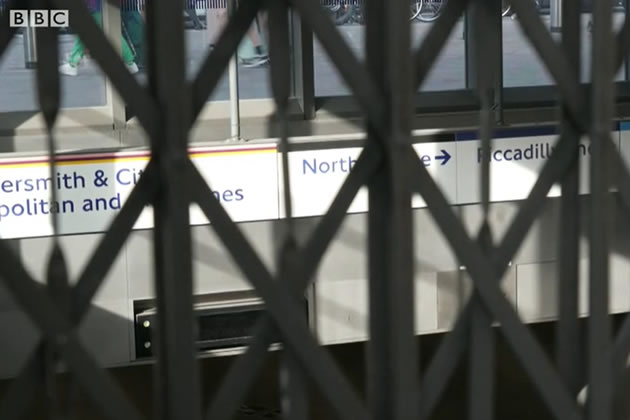
TfL is warning of 'significant disruption' if strikes proceed
April 15, 2026
RMT tube drivers are threatening to walk out six times between April and June in the ongoing dispute over a proposed four-day working week
London commuters face a prolonged spell of travel chaos after it was confirmed they plan to strike across twelve days between April and June, in what is expected to be the most disruptive period for the capital's transport network since last September.
The first walkout begins at midday this Tuesday, April 21, with a second following from midday on Thursday, April 23. Each strike lasts 24 hours, meaning four days of next week's working week will see significant disruption on the Underground.
Transport for London has warned passengers to expect "significant disruption" if the action goes ahead, and urged travellers to check before they journey. However, hopes remain that, as previously, there will be a late cancellation of the industrial action if any progress is made in talks with management.
At the heart of the row is TfL's proposal to introduce a compressed four-day working week for tube drivers. The RMT argues that condensing a normal working week into four days raises serious concerns about shift lengths, fatigue and safety.
RMT general secretary Eddie Dempsey said: "London Underground is trying to force through major changes to working patterns that have already been rejected by our members. We are clear that these proposals raise serious concerns around fatigue, safety and work-life balance. Despite our best efforts over many months, no satisfactory outcome has been reached so we have no choice but to call strike dates."
TfL's transport commissioner Andy Lord pushed back on this characterisation, insisting the scheme is entirely voluntary. "We have been engaging with unions on how to implement a voluntary new working pattern, potentially trialling this on the Bakerloo line only," he said. "There is no need for this industrial action. No-one will be required to change their working pattern if they choose not to."
The other union representing tube drivers, ASLEF, is in favour of the proposed changes.
A majority of RMT members voted for strike action back in February, and while the first planned walkouts — scheduled for late March — were suspended following what Dempsey described as a "show of industrial strength" that brought management to the table, six further strike dates have since been confirmed.
TfL sources indicated that no formal peace talks are currently planned, though further meetings between the two sides could take place before next week's action begins. The dispute, as the RMT has made clear, "remains live."
The six strikes will each run for 24 hours, spanning the following dates:
- April 21–22 (midday to 11:59am)
- April 23–24 (midday to 11:59am)
- May 19–20 (midday to 11:59am)
- May 21–22 (midday to 11:59am)
- June 16–17 (midday to 11:59am)
- June 18–19 (midday to 11:59am)
On each strike day, normal service will run until midday, after which severe disruption is expected. The following morning will see continued disruption before services gradually return to normal.
TfL expects the strikes to affect the whole Underground network, though it anticipates being able to run reduced services on most lines. The impact is expected to be less severe than September's strikes, as ASLEF drivers and non-driver RMT members are not taking part.
Passengers on the Overground should note that Windrush line services — running between Highbury & Islington, Clapham Junction, West Croydon and Crystal Palace — will also be affected, as Overground staff are walking out in a separate action on strike days. The rest of the Overground and the Elizabeth line are expected to run normally, though both will be considerably busier than usual.
The strikes could be called off at any point should TfL and the RMT reach a negotiated settlement.
Like Reading Articles Like This? Help Us Produce More This site remains committed to providing local community news and public interest journalism. Articles such as the one above are integral to what we do. We aim to feature as much as possible on local societies, charities based in the area, fundraising efforts by residents, community-based initiatives and even helping people find missing pets. We've always done that and won't be changing, in fact we'd like to do more. However, the readership that these stories generates is often below that needed to cover the cost of producing them. Our financial resources are limited and the local media environment is intensely competitive so there is a constraint on what we can do. We are therefore asking our readers to consider offering financial support to these efforts. Any money given will help support community and public interest news and the expansion of our coverage in this area. A suggested monthly payment is £8 but we would be grateful for any amount for instance if you think this site offers the equivalent value of a subscription to a daily printed newspaper you may wish to consider £20 per month. If neither of these amounts is suitable for you then contact info@neighbournet.com and we can set up an alternative. All payments are made through a secure web site. One-off donations are also appreciated. Choose The Amount You Wish To Contribute. If you do support us in this way we'd be interested to hear what kind of articles you would like to see more of on the site – send your suggestions to the editor. For businesses we offer the chance to be a corporate sponsor of community content on the site. For £30 plus VAT per month you will be the designated sponsor of at least one article a month with your logo appearing if supplied. If there is a specific community group or initiative you'd like to support we can make sure your sponsorship is featured on related content for a one off payment of £50 plus VAT. All payments are made through a secure web site. |