New Local Planning Rules Aim to Boost Social Rent Housing
Must now make up 70% of all affordable units built
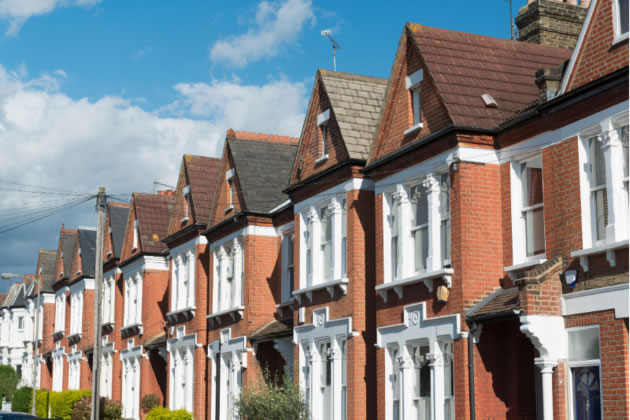
Terraced housing in the borough. Picture: Wandsworth Council
March 3, 2026
Wandsworth Council’s updated Local Plan has cleared its final hurdle after an independent Planning Inspector ruled the changes sound and legally compliant, paving the way for a significant shift in how affordable housing is delivered in the borough. The revised policies, due for adoption at Full Council on 4 March, will require developers to provide a higher proportion of social rent homes and make new financial contributions from small developments for the first time.
The updated plan increases the required proportion of social rent within affordable housing from 50% to at least 70%, reflecting evidence that this is the tenure most urgently needed in Wandsworth. Small schemes of fewer than ten homes will now be required to pay £50,000 per unit towards affordable housing delivery. Build-to-Rent, Purpose-Built Student Accommodation and co-living schemes will also face strengthened obligations to contribute to genuinely affordable homes.
Cabinet Member for Housing Aydin Dikerdem said the changes would ensure private development delivers more public benefit, adding that the council intends to “fight for as much affordable housing as we can get” to help residents on the borough’s waiting list.
The council’s latest Housing Needs Assessment shows Wandsworth requires up to 23,600 additional affordable homes by 2038, with two-thirds of that need for social rent. Around 11,000 households are currently on the waiting list.
While the Inspector has now approved the revised policies, the council’s approach to affordable housing has faced some criticism over the past two years. Much of this centred on earlier proposals—now abandoned—to require 45% affordable housing in all private developments, a figure significantly above the London-wide benchmark.
In 2025, Mayor Sadiq Khan formally objected to Wandsworth’s direction, warning that the borough’s policies were “not in general conformity” with the London Plan and risked slowing down development and reducing overall housing delivery. The council was later instructed to reduce it to the capital-wide standard of 35%.
Housing commentators also criticised the borough’s earlier draft plan as “regressive” and “self-defeating,” arguing that overly rigid targets could deter developers and ultimately lead to fewer affordable homes being built.
Developer groups and planning specialists have previously warned that higher social rent requirements could affect scheme viability, potentially slowing the pace of new housing delivery. No formal objections to the latest revisions have been published since the Inspector’s approval, but the earlier disputes highlight the political and practical tensions surrounding the borough’s strategy.
The updated Local Plan will be used to assess all future planning applications once adopted. The council argues that the changes place Wandsworth among London’s most ambitious boroughs for affordable housing, while critics caution that the borough must balance ambition with deliverability to avoid repeating past conflicts.
Like Reading Articles Like This? Help Us Produce More This site remains committed to providing local community news and public interest journalism. Articles such as the one above are integral to what we do. We aim to feature as much as possible on local societies, charities based in the area, fundraising efforts by residents, community-based initiatives and even helping people find missing pets. We've always done that and won't be changing, in fact we'd like to do more. However, the readership that these stories generates is often below that needed to cover the cost of producing them. Our financial resources are limited and the local media environment is intensely competitive so there is a constraint on what we can do. We are therefore asking our readers to consider offering financial support to these efforts. Any money given will help support community and public interest news and the expansion of our coverage in this area. A suggested monthly payment is £8 but we would be grateful for any amount for instance if you think this site offers the equivalent value of a subscription to a daily printed newspaper you may wish to consider £20 per month. If neither of these amounts is suitable for you then contact info@neighbournet.com and we can set up an alternative. All payments are made through a secure web site. One-off donations are also appreciated. Choose The Amount You Wish To Contribute. If you do support us in this way we'd be interested to hear what kind of articles you would like to see more of on the site – send your suggestions to the editor. For businesses we offer the chance to be a corporate sponsor of community content on the site. For £30 plus VAT per month you will be the designated sponsor of at least one article a month with your logo appearing if supplied. If there is a specific community group or initiative you'd like to support we can make sure your sponsorship is featured on related content for a one off payment of £50 plus VAT. All payments are made through a secure web site. |