Hounslow Council Accused of Sending 'Imposter' Social Worker
Claims made that fabricated report was made for terminally ill-woman
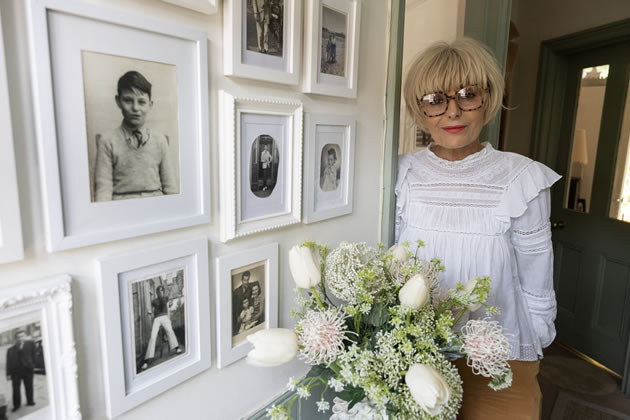
Moya Garland in her home. Picture: Facundo Arrizabalaga/MyLondon
July 22, 2026
Hounslow Council is facing allegations of maladministration and coercion as a family claims the council deployed an “imposter social worker” to their home, and denied support to a terminally ill 79-year-old woman.
Patricia Garland, who has “resiliently” managed complex conditions for years, suffered a severe fall in February, tripping on a loose paving slab. Following a hospital scan to check for head trauma, doctors discovered an inoperable, terminal brain tumour.
According to her daughter, Moya Garland, Hounslow Council has, in spite of this, refused to provide adequate support to the family. The ongoing battle with the council has “taken over” their lives, with Ms Garland describing the ordeal as leading to her having “no pleasure at all” anymore.
On April 14, Patricia Garland’s GP initiated an SR1 form – a legal medical document confirming a patient is likely to die within twelve months, which should trigger an expedited care protocol. Despite this, Moya describes her mother as “at full mental capacity, and very sharp.”
Yet, Ms Garland claims that the council failed to provide any timely assistance. She described Hounslow Council as “a council that needs to be stopped” stating that they have received “nothing” whilst her mother’s health deteriorated.
The family say the council ignored requests for urgent assistance under Section 14 of the Care Act, with the first request made in February. Despite initial requests, the council did not make contact with the family until March 18, some weeks later.
Additionally, her GP initiated the SR1 on April 14 triggering a strict protocol for terminal illness that should take days. However, it took weeks, with an assessment document not being provided until May 15.
When a council officer finally contacted her, Moya alleges the authority’s immediate strategy was hostile, “threatening” that the family will be separated with Patricia “carted off into some ghastly care home.”
The situation took a bizarre turn in mid-April when a woman visited their home on behalf of the council to conduct a care assessment. Moya says she introduced herself as the “allocated social worker.”
However, following a background check on the Social Work England register, Ms Garland found that the name of the alleged social worker did not appear. This has been checked by the Local Democracy Reporting Service (LDRS), although the council have not confirmed the job title of the person sent to the house.
When the official Care Act assessment finally arrived in the post a few days later, it simply had “[their] name on it. No job title. No ID underneath it.” Moya believes that the council sent someone to conduct the care assessment who was not truly a social worker.
Reflecting on the ordeal, Ms Garland described the “social worker” as an “imposter” and said that the council was “coming along with a sledgehammer” to their personal life. She said: “[The council and care worker] completely undermined who [Patricia] is. [They’ve] undermined her self-respect, her family, her daughter.”
When Moya and Patricia received the assessment undertaken by this “social worker”, they were shocked to see the details. Moya described the assessment as an “utterly farcical bizarre document” that was “absolutely ludicrous to the point of illiterate.”
She said that it failed to accurately detail Patricia’s terminal medical needs and instead was filled with bizarre fabrications about the family’s history, religion, and daily life. The document stated that Moya’s mother was of “Irish descent and my father was Hungarian Jewish”.
Ms Garland found this “discriminatory”, noting that her mother is English and her father, who passed away eight years ago, was as actually a Zen Buddhist. The assessment also claimed that a Marie Curie team “identified concerns about coercion” in Patricia’s previous care environment.
She stated that her mother has never had a previous care environment, nor has she ever been referred to, spoken to, or met anyone from Marie Curie. She told the LDRS that the document completely invented geographical history, stating: “My extended family history includes a romantic story of my parents… living in Brazil, there is no romantic story, my parents never lived in Brazil.”
Instead of providing support to a terminally ill woman, Ms Garland says that Hounslow Social Services allegedly resorted to “coercion and intimidation.” When she urgently requested a care package, she claims the council repeatedly attempted to force her into acting as her mother’s primary paid carer, using the threat of forced as leverage.
Ms Garland had sought financial support for minor bathroom and mobility adaptations to support her mother, as is typically provided in these circumstances. The family were reluctant to have care workers coming into their home, particularly after the ordeal with the social worker.
When the council instead tried to formally hire Ms Garland to be the in-home carer – offering her £14.10 an hour for only 35 hours a week, she rejected it. Ms Garland felt this arrangement would force her to abandon her 25-year business and provide 19 hours of unpaid “slave labour” daily to cover her mother’s 24/7 needs.
When rejecting this, she says she was told that if she did not accept, the council would be forced to consider putting Patricia in a home. She said “hell will freeze over”’ before she would allow the council to place her mother in a care facility.
Ms Garland viewed this as a tactic designed to “cause financial loss to a working person” and save the council money. Ultimately, due to the “psychological warfare”, she says she and Patricia want the council staff to “go away and stay away.”
Originally, a Hounslow Council spokesperson said: “As this case is going through a formal complaint procedure under the Care Act 2014, we cannot comment publicly on any specific detail at this time.” However, once the formal complaint procedure concluded, the council were once again approached for comment.
In an unusual move, the council continued to refuse to comment, this time saying, “We are still talking to the family to find a way forward in this case and wouldn’t consider any public comment appropriate at this time.” This is out of the ordinary because usually when the council is contacted by the LDRS relating to any case, it would be in discussions with individuals the story is centred around and looking for a way forward.
Despite this, the council regularly provide answers to our questions and a statement alongside this responding to allegations made. In this instance, Hounslow Council has twice rejected the opportunity to do so.
Philip James Lynch - Local Democracy Reporter
Like Reading Articles Like This? Help Us Produce More This site remains committed to providing local community news and public interest journalism. Articles such as the one above are integral to what we do. We aim to feature as much as possible on local societies, charities based in the area, fundraising efforts by residents, community-based initiatives and even helping people find missing pets. We’ve always done that and won’t be changing, in fact we’d like to do more. However, the readership that these stories generates is often below that needed to cover the cost of producing them. Our financial resources are limited and the local media environment is intensely competitive so there is a constraint on what we can do. We are therefore asking our readers to consider offering financial support to these efforts. Any money given will help support community and public interest news and the expansion of our coverage in this area. A suggested monthly payment is £8 but we would be grateful for any amount for instance if you think this site offers the equivalent value of a subscription to a daily printed newspaper you may wish to consider £20 per month. If neither of these amounts is suitable for you then contact info@neighbournet.com and we can set up an alternative. All payments are made through a secure web site. One-off donations are also appreciated. Choose The Amount You Wish To Contribute. If you do support us in this way we’d be interested to hear what kind of articles you would like to see more of on the site – send your suggestions to the editor. For businesses we offer the chance to be a corporate sponsor of community content on the site. For £30 plus VAT per month you will be the designated sponsor of at least one article a month with your logo appearing if supplied. If there is a specific community group or initiative you’d like to support we can make sure your sponsorship is featured on related content for a one off payment of £50 plus VAT. All payments are made through a secure web site. |