Ealing Council Failed to Provide Autistic Child with Speech Therapy
Watchdog report criticises its communication with parent
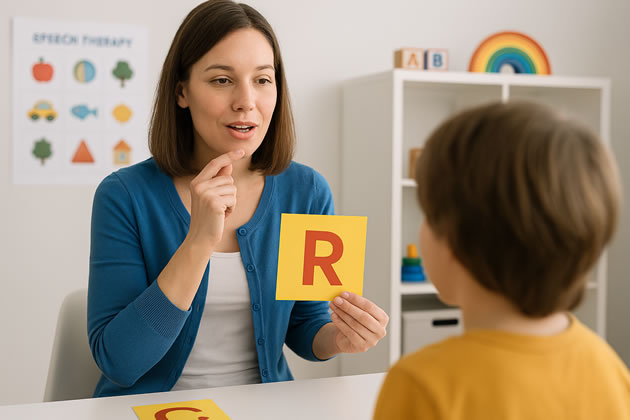
The child's father had to meet the cost of therapy out his own pocket. Picture: AI generated
January 13, 2026
Ealing Council has apologised after it failed to ensure a child received speech and language therapy for over a year. The Local Government and Social Care Ombudsman has forced Ealing Council to pay the affected family £700 compensation and has urged the council to review its commissioning arrangements to prevent similar failures in future.
The child’s father, referred to as Mr X in the report, had complained that his child had not received speech and language therapy and had missed around half of his occupational therapy. This was something the child, referred to as Child Z in the report, should have received as outlined in their Education, Health and Care Plan (EHCP).
The council has a duty to make sure the child or young person receives the special educational provision set out in their EHCP. Mr X also complained that communication was poor on the part of the council, causing “considerable frustration and distress”.
The child, who has a diagnosis of autism, was supposed to receive 15.75 hours of speech and language therapy and 22 hours of occupational therapy during the academic year starting in September 2024, following the finalising of their ECHP in August 2024. One month later the council referred the child to six providers of each therapy.
In October 2024, the council contacted the father to request the details of a speech and language therapist he had contacted from a list of six provided to him, and advised him it was open to arranging a personal budget for the provision. However, there is no record of the council contacting Mr X until he contacted Ealing Council in December 2024.
This is when Mr X informed Ealing Council that he had arranged for speech and language therapy to begin in January 2025, however he received no response, so he sent a follow-up email in January 2025. Between January and May 2025, Mr X arranged eight hours of speech and language therapy out of his own pocket for the child, and was later reimbursed by the council.
In February 2025, Child Z was still without an occupational therapist. The council advised Mr X that it was liaising with a therapist.
In March 2025, Ealing Council contacted Mr X again to advise him that the occupational therapist could offer remote sessions, which he said he would consider. However, the council took no action until April 2025.
In March 2025 Mr X complained to the council under stage two of the complaints procedure. In its response, the council again apologised for its failure to fulfil the child’s therapy provision, but said it believed the concerns had largely been resolved. Mr X contacted the council twice during May to request an update about plans for the remaining provision, but the council took four weeks to respond.
The Ombudsman found that the child received no speech and language therapy between September 2024 and January 2025, missing 7.75 hours they were entitled to on top of what the father had arranged himself. This was found to be a failure by the council in its legal duty.
The watchdog also found that the child received no occupational therapy between August 2024 and May 2025, with the full provision only delivered in the latter stages of the year. This meant the child missed the opportunity to benefit from therapy earlier.
The report also criticises the council’s poor communication, noting the fact Mr X’s emails often went unanswered and he had long delays in receiving a response. These failures continued even after an initial apology was issued by the council.
The council must pay the father a total of £700 in compensation. It must also review its commissioning arrangements to ensure that going forward these can meet timescales for EHCP needs assessments and provision of therapies once a plan is finalised.
An Ealing Council spokesperson said: “We sincerely apologise for our failings in this case and apologised to the family and paid them compensation in acknowledgment of the frustration and uncertainty caused by the delays in arranging therapy. Supporting residents with extra needs is a top priority for us.
“We have reviewed our commissioning arrangements to ensure, going forward, assessments take place in a timely manner and we are working to improve our communications. We have been rapidly improving our service, which was most recently recognised in an Ofsted special educational needs and disability (SEND) report in September.
“We recognise that there is still work to do to ensure all residents receive a consistently high level of service and we are committed to acting on feedback. There has been a national shortage of therapists which contributed to the delays and we are working closely with our partners to mitigate these challenges and ensure our services continue to improve so we deliver the very best experiences for all our children and young people with additional needs.”
Philip James Lynch - Local Democracy Reporter
Like Reading Articles Like This? Help Us Produce More This site remains committed to providing local community news and public interest journalism. Articles such as the one above are integral to what we do. We aim to feature as much as possible on local societies, charities based in the area, fundraising efforts by residents, community-based initiatives and even helping people find missing pets. We’ve always done that and won’t be changing, in fact we’d like to do more. However, the readership that these stories generates is often below that needed to cover the cost of producing them. Our financial resources are limited and the local media environment is intensely competitive so there is a constraint on what we can do. We are therefore asking our readers to consider offering financial support to these efforts. Any money given will help support community and public interest news and the expansion of our coverage in this area. A suggested monthly payment is £8 but we would be grateful for any amount for instance if you think this site offers the equivalent value of a subscription to a daily printed newspaper you may wish to consider £20 per month. If neither of these amounts is suitable for you then contact info@neighbournet.com and we can set up an alternative. All payments are made through a secure web site. One-off donations are also appreciated. Choose The Amount You Wish To Contribute. If you do support us in this way we’d be interested to hear what kind of articles you would like to see more of on the site – send your suggestions to the editor. For businesses we offer the chance to be a corporate sponsor of community content on the site. For £30 plus VAT per month you will be the designated sponsor of at least one article a month with your logo appearing if supplied. If there is a specific community group or initiative you’d like to support we can make sure your sponsorship is featured on related content for a one off payment of £50 plus VAT. All payments are made through a secure web site. |