Row Over Fly-tipping Fines Reignites at Borough Council
Labour rejects cross-party call for a change of approach
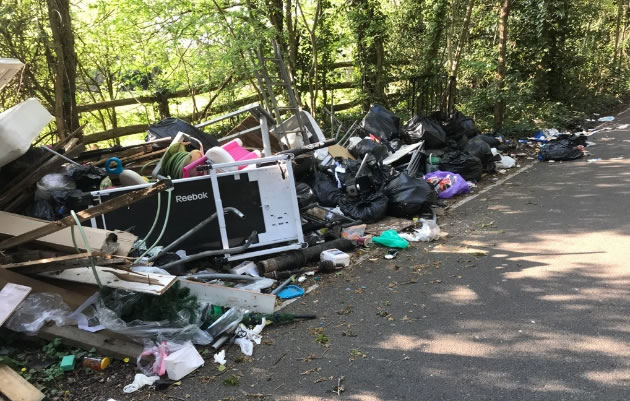
Labour says flytipping is increasing more slowly in the borough than the rest of the country
|
July 24, 2026
The long-running dispute over fly-tipping enforcement in Hounslow flared again at Tuesday night’s full council meeting (21 July), where Labour councillors used their single-seat majority to block a motion calling for an overhaul of the borough’s £1,000 fixed penalty regime. The vote came after months of public debate, a petition signed by more than 3,000 residents, and growing scrutiny of how the council balances deterrence with fairness.
The Conservative motion, brought by Opposition Leader Cllr Jack Emsley and seconded by Cllr Parinoor Kaur in her maiden speech, argued that the current enforcement system is “heavy-handed” and unfairly penalises residents who make genuine mistakes. The motion cited the widely publicised case of Feltham resident Loretta Alvarez, a single mother and NHS mental health nurse who received a £1,000 fine after leaving an envelope beside an overflowing bin. Every opposition councillor in the chamber – Conservatives, Reform, Greens, Liberal Democrat and the independent member – voted in favour of the motion. Labour councillors voted against.
Opposition members said the borough’s enforcement strategy has failed to meet its own targets. The council’s quarterly monitoring report shows that fly-tipping has increased by around 2 per cent since the last corporate plan was set in 2022, despite a stated ambition to achieve a 25 per cent reduction. Cllr Kaur told the chamber that residents “rightly expect the Council to pursue those who repeatedly dump waste—not punish residents for genuine mistakes while serious fly-tippers continue unchecked.” Cllr Emsley said Labour had “shrunk away from delivering for residents” and argued that the Conservatives had demonstrated they were “the administration in waiting”.
Labour councillors rejected the motion and tabled an amendment setting out their own position. Their amendment emphasised that Hounslow’s fly-tipping rate must be understood in context: while incidents in the borough have risen by 2 per cent since 2022, fly-tipping across England has risen by more than 15 per cent over the same period. The amendment also noted that Hounslow has the seventh-highest rate of reported fly-tipping in London, a figure Labour attributes partly to the popularity of reporting tools such as FixMyStreet. According to the council, 99.8 per cent of reported fly-tips are collected within 24 hours.
Labour councillors argued that the £1,000 fixed penalty is only one part of a wider enforcement and prevention strategy. They pointed to a 12 per cent reduction in fly-tipping in the most recent quarter compared with the same period last year, before the new enforcement regime was introduced. They also highlighted joint operations with the Metropolitan Police, including Operation SWIFT, which targets illegal waste carriers and large-scale dumping. The council says several major prosecutions are currently in the pipeline.
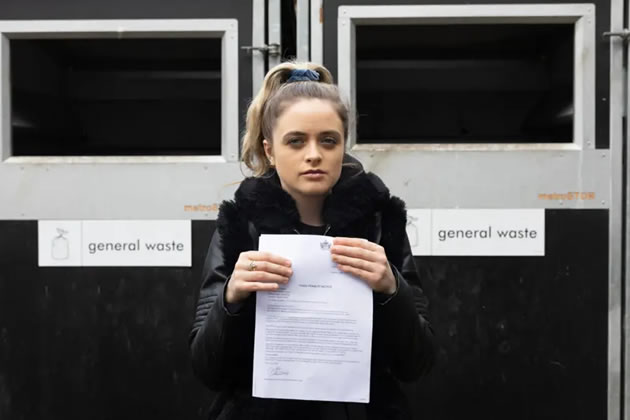
Single mother and mental health nurse Loretta Alvarez with the £1,000 fine she received
In a statement after the meeting, Labour Leader Cllr Shantanu Rajawat said that “everyone wants enforcement against fly-tipping that is firm, fair and effective,” but argued that the Conservative proposal to issue warnings to first-time offenders amounted to a “One Free Flytip” policy. He said the administration would instead focus on making it easier for residents to dispose of waste responsibly, including the introduction of free bulky waste collections, community pop-up tips for reuse and recycling, and extended opening hours at Space Waye following a successful pilot removing the booking system.
Labour also defended its enforcement contractor, APCOA, saying the company contributes to tackling anti-social behaviour, illegal street trading and enforcement of the borough’s Public Space Protection Orders. The contract is already under review and will be scrutinised by the Overview and Scrutiny Committee on 1 September.
The Conservatives say they will continue to press for a shift in enforcement strategy, including the use of cameras in fly-tipping hotspots and a renewed focus on industrial-scale offenders. They argue that the current approach places too much emphasis on revenue generation and too little on deterrence.
Both sides agree that fly-tipping remains a significant challenge for the borough. The council estimates that cleaning up dumped waste costs taxpayers around £4 million a year. With fly-tipping rising nationally and Hounslow’s own targets still unmet, the debate over how best to tackle the problem – and how to balance deterrence with fairness – is likely to continue well beyond this week’s contentious vote.
Like Reading Articles Like This? Help Us Produce More This site remains committed to providing local community news and public interest journalism. Articles such as the one above are integral to what we do. We aim to feature as much as possible on local societies, charities based in the area, fundraising efforts by residents, community-based initiatives and even helping people find missing pets. We’ve always done that and won’t be changing, in fact we’d like to do more. However, the readership that these stories generates is often below that needed to cover the cost of producing them. Our financial resources are limited and the local media environment is intensely competitive so there is a constraint on what we can do. We are therefore asking our readers to consider offering financial support to these efforts. Any money given will help support community and public interest news and the expansion of our coverage in this area. A suggested monthly payment is £8 but we would be grateful for any amount for instance if you think this site offers the equivalent value of a subscription to a daily printed newspaper you may wish to consider £20 per month. If neither of these amounts is suitable for you then contact info@neighbournet.com and we can set up an alternative. All payments are made through a secure web site. One-off donations are also appreciated. Choose The Amount You Wish To Contribute. If you do support us in this way we’d be interested to hear what kind of articles you would like to see more of on the site – send your suggestions to the editor. For businesses we offer the chance to be a corporate sponsor of community content on the site. For £30 plus VAT per month you will be the designated sponsor of at least one article a month with your logo appearing if supplied. If there is a specific community group or initiative you’d like to support we can make sure your sponsorship is featured on related content for a one off payment of £50 plus VAT. All payments are made through a secure web site. |