Charing Cross Hospital Prepares for 'Challenging' Winter
With increased demand for services and new junior doctors' strikes
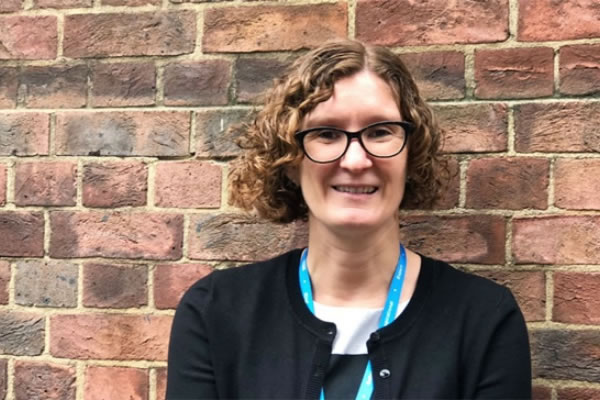
Claire Hook, chief operating officer at Imperial College Healthcare NHS Trust, says, “We expect the next few months to be very challenging
December 18, 2023
Charing Cross Hospital is gearing up for a “challenging” winter, with higher demand for its emergency services and two new strikes by junior doctors, starting this week.
The British Medical Association (BMA) has announced plans for two further junior doctors’ strikes from 7am on Wednesday 20 December to 7am on Saturday23 December.
The second strike will last from 7am on Wednesday 3 January to 7am on Tuesday 9 January, 2024.
The Hospital Consultants and Specialists Association (HCSA) is also planning a junior doctors' strike for the same period this week.
Imperial College Healthcare NHS Trust, which includes Charing Cross, Hammersmith, Queen Charlotte’s and Chelsea and St Mary’s Hospitals warns that these strikes will have a significant impact, and its priority will be to ensure everyone’s safety.
The trust says, “We will continue to run urgent and emergency services throughout the strike, including our A&E departments and maternity units. But we will need to reschedule most of the planned operations and outpatient appointments that are currently booked for this period.
“ If we need to reschedule your appointment, including if we need to change it to a virtual appointment, we will contact you directly as soon as possible to tell you. We will arrange a new appointment as soon as we can.
“ We are expecting a challenging few days, with extended waits in our A&E departments. We encourage anyone who needs non-emergency medical help or advice to go to NHS 111 online. But, if you need emergency care (for instance if someone is seriously ill, injured or their life is at risk), you should continue to call 999.”
You can find more information here.
The trust says it is already seeing higher demand for its accident and emergency departments, while it is continuing to tackle the long waits for planned care that built up during the pandemic and more recent periods of industrial action.
It has been awarded an additional £2.7million to help care for more patients, with winter initiatives including opening an extra 24 staffed-beds across St Mary’s and Charing Cross Hospitals, and employing additional doctors in emergency departments to speed up the admission and discharge of patients.
There will also be extra care for older, frail patients, helping them get the care they need with ongoing frailty support services to avoid unnecessary admissions.
The ‘same day emergency care’ services (urgent care away from the emergency department, without the need for an overnight stay) will be expanded, enabling direct referrals from NHS111 and London Ambulance Service, allowing suitable patients to bypass A&E completely. There will also be additional space provided for this service at Charing Cross Hospital.
Patients who become critically ill will get the care they need as quickly as possible by moving to 24/7 availability for critical care outreach teams at St Mary’s, Charing Cross and Hammersmith hospitals.
Patients will also be helped to go home as soon as possible using Homelink, a clinician-led service providing hospital-at-home care, to help people who are medically fit to leave hospital but who need some extra support.
There will be more use of “virtual wards”, where suitable patients can be digitally monitored from home, a service which cared for over 1,600 people last year.
‘Turnaround’ times will be reduced by opening the discharge lounge at Charing Cross until 7pm, providing a comfortable space away from the wards for patients to wait before they go home.
The trust adds that it is also focusing on the health and wellbeing of staff this winter, with services which include on-site winter vaccine hubs, free breakroom supplies (funded by Imperial Health Charity) and an expanded staff counselling service.
Claire Hook, chief operating officer at Imperial College Healthcare NHS Trust, says, “We expect the next few months to be very challenging. Our teams have put in a huge amount of work to make the most of our capacity this winter and ensure we continue to provide the best possible care.”
Like Reading Articles Like This? Help Us Produce More This site remains committed to providing local community news and public interest journalism. Articles such as the one above are integral to what we do. We aim to feature as much as possible on local societies, charities based in the area, fundraising efforts by residents, community-based initiatives and even helping people find missing pets. We’ve always done that and won’t be changing, in fact we’d like to do more. However, the readership that these stories generates is often below that needed to cover the cost of producing them. Our financial resources are limited and the local media environment is intensely competitive so there is a constraint on what we can do. We are therefore asking our readers to consider offering financial support to these efforts. Any money given will help support community and public interest news and the expansion of our coverage in this area. A suggested monthly payment is £8 but we would be grateful for any amount for instance if you think this site offers the equivalent value of a subscription to a daily printed newspaper you may wish to consider £20 per month. If neither of these amounts is suitable for you then contact info@neighbournet.com and we can set up an alternative. All payments are made through a secure web site. One-off donations are also appreciated. Choose The Amount You Wish To Contribute. If you do support us in this way we’d be interested to hear what kind of articles you would like to see more of on the site – send your suggestions to the editor. For businesses we offer the chance to be a corporate sponsor of community content on the site. For £30 plus VAT per month you will be the designated sponsor of at least one article a month with your logo appearing if supplied. If there is a specific community group or initiative you’d like to support we can make sure your sponsorship is featured on related content for a one off payment of £50 plus VAT. All payments are made through a secure web site. |
