Loneliness: The Other Silent Emergency
Councillor Gary Busuttil says problem will remain when lockdown ends
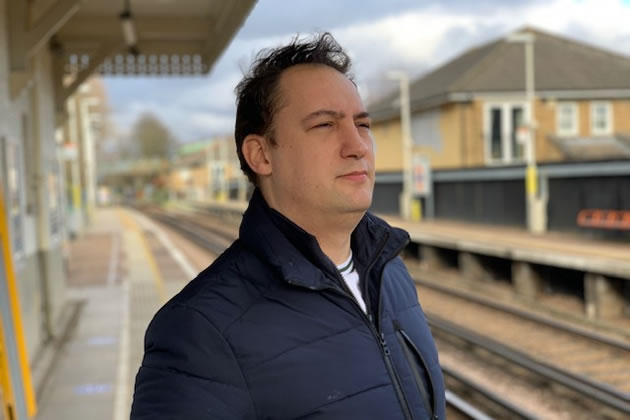 Cllr Gary Busuttil
|
Watching a TV programme last week, in which Roman Kemp, son of Martin Kemp, titled The Silent Emergency, highlighted mental health and the suicide crisis in young men. It’s a very poignant subject, particularly at a time when our everyday lives have been severely disrupted and the coronavirus has inadvertently affected young adults and teenagers mainly in terms of education and job prospects.
According to the ONS, the main age group for suicide deaths is 45-49. However, the number of suicide deaths from the ages of 10-24 is rising, and males are three times more likely than females to take their own life. Suicide can be a taboo topic. Often, people who are feeling suicidal don’t want to worry or burden anyone with how they feel and so they don’t discuss it.
Though it’s absolutely necessary to highlight the topic of suicides, there is another topic I consider to be the other silent emergency: loneliness. It’s also topic people tend to shudder at when it’s brought up in conversation. A common misconception, 9 out of 10 people think that loneliness only affects older people. In actual fact it affects younger people as much if not more than older people. I can personally confess, that there have been times particularly during this pandemic, when I’ve felt lonely, despite living in a city of more than 8.5 million people and living a busy lifestyle.
Some of the physical health risks associated with loneliness are increased risk of high blood pressure, increased risk of coronary heart disease and stroke, and is comparable to obesity and cigarette smoking in its effect. Though loneliness isn’t considered a mental health problem, the two are very closely linked. It is associated with a greater risk of cognitive decline and dementia, more prone to depression, and possible suicide.
As a Liberal Democrat councillor over the past year, since the first lockdown in March 2020, I’ve been very impressed in how residents in Southfield Ward have responded, by creating street WhatsApp groups, looking out for their neighbours, ensuring the vulnerable have their day-to-day needs, and that has been truly humbling. Though we as councillors have not been permitted for much of the past year to meet residents face-to-face, we have kept ourselves contactable and helped many residents with their casework. Such goodwill from everyone has in my view strengthened our community in Southfield.
Liberal Democrat state that loneliness will not disappear once the coronavirus subsides and everything starts to open up. For most of the past year, many people have not been out of their own homes and may find it difficult to get back to mixing socially again. There are many different recommendations in a variety of reports on how to tackle loneliness.
As councillors and leaders of our community, the difference we can make is identifying and investing in organic community groups, groups in which residents create and take the lead, and researching and guiding people to resources that exist out there, but which people don’t know about.
Ultimately nothing is more engaging than just being asked how things are. When we were children we were taught not to talk to strangers, but I urge people to go and do the opposite.
Talk to strangers!
It is a well-known fact that people who are more connected socially are better able to cope with and recover from crises. So, let us all try to engage people we would not engage with so that we can help reduce loneliness and improve our mental health.
Gary Busuttil (Southfield Ward Liberal Democrat Councillor)
Like Reading Articles Like This? Help Us Produce More This site remains committed to providing local community news and public interest journalism. Articles such as the one above are integral to what we do. We aim to feature as much as possible on local societies, charities based in the area, fundraising efforts by residents, community-based initiatives and even helping people find missing pets. We’ve always done that and won’t be changing, in fact we’d like to do more. However, the readership that these stories generates is often below that needed to cover the cost of producing them. Our financial resources are limited and the local media environment is intensely competitive so there is a constraint on what we can do. We are therefore asking our readers to consider offering financial support to these efforts. Any money given will help support community and public interest news and the expansion of our coverage in this area. A suggested monthly payment is £8 but we would be grateful for any amount for instance if you think this site offers the equivalent value of a subscription to a daily printed newspaper you may wish to consider £20 per month. If neither of these amounts is suitable for you then contact info@neighbournet.com and we can set up an alternative. All payments are made through a secure web site. One-off donations are also appreciated. Choose The Amount You Wish To Contribute. If you do support us in this way we’d be interested to hear what kind of articles you would like to see more of on the site – send your suggestions to the editor. For businesses we offer the chance to be a corporate sponsor of community content on the site. For £30 plus VAT per month you will be the designated sponsor of at least one article a month with your logo appearing if supplied. If there is a specific community group or initiative you’d like to support we can make sure your sponsorship is featured on related content for a one off payment of £50 plus VAT. All payments are made through a secure web site. |
March 27, 2021